
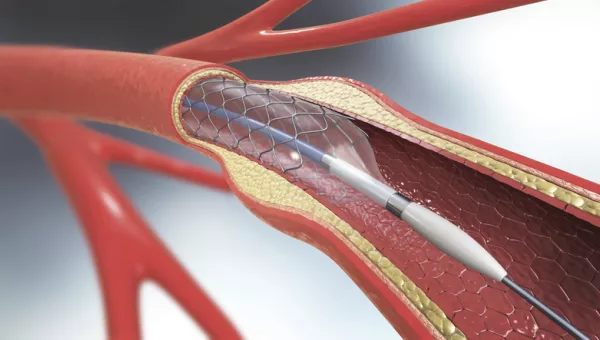
Angioplasty is a minimally invasive procedure that opens narrowed or blocked arteries to improve blood flow. At Cape Fear Valley Health, our heart and vascular specialists use advanced catheter-based techniques to treat coronary arteries that supply the heart and peripheral arteries in the legs, arms, and other areas. Our team personalizes each angioplasty procedure to your diagnosis and goals.
Overview of Angioplasty
During angioplasty, a thin tube (catheter) is guided to a narrowed artery and a small balloon is inflated to widen the vessel. This is commonly referred to as balloon angioplasty. In many cases, a stent—a tiny mesh scaffold—is placed to help keep the artery open. Angioplasty can relieve chest pain (angina), improve walking and leg pain from peripheral artery disease (PAD), treat or prevent a heart attack, and restore blood flow to affected tissues. When the heart’s arteries are treated, the angioplasty procedure is called coronary angioplasty.
Compared with medications alone, angioplasty provides immediate mechanical relief of a blockage. Compared with coronary bypass surgery, it uses small punctures rather than large incisions, typically allows faster recovery, and is best for discrete or moderate blockages. Bypass surgery may be recommended for complex, multiple, or left main coronary disease.
Candidates often have symptoms such as chest pressure, shortness of breath with exertion, reduced exercise tolerance, leg pain or cramping when walking (claudication), or nonhealing foot wounds with PAD. Risk factors include high blood pressure, high cholesterol, diabetes, smoking, family history of early heart disease, and obesity. Diagnostic tests that may lead to an angioplasty procedure include stress testing, coronary calcium scoring, CT angiography, ankle-brachial index for PAD, duplex ultrasound, and invasive angiography to confirm blockage location and severity.
Angioplasty Procedure
The procedure begins with numbing the access site—commonly the wrist (radial artery) or groin (femoral artery). A small sheath is placed into the artery, and a guiding catheter is advanced to the target vessel under X-ray. A fine wire crosses the narrowing, a balloon is positioned and inflated to compress plaque (balloon angioplasty), and a stent may be deployed to keep the artery open. Contrast dye helps the care team visualize blood flow. The catheter and sheath are then removed, and the access site is sealed with pressure or a closure device. Many patients have a straightforward angioplasty with same-day recovery.
- Coronary angioplasty: Treats arteries that supply the heart; this angioplasty procedure is often paired with drug-eluting stents.
- Peripheral angioplasty: Treats arteries in the legs, arms, or other areas.
- Balloon angioplasty: Dilation without a stent, used in select vessels or anatomies; balloon angioplasty may be preferred in small or branching arteries.
- Stent options: Bare-metal and drug-eluting stents; drug-eluting stents slowly release medication to reduce scar tissue and lower the chance of re-narrowing.
Most procedures use local anesthesia with light sedation; general anesthesia is uncommon. Heart rhythm, blood pressure, and oxygen levels are continuously monitored. Possible immediate complications include bleeding at the access site, vessel spasm, allergic reaction to contrast, arrhythmias, or, rarely, heart attack or stroke. Many patients go home the same day or after an overnight stay following coronary angioplasty or peripheral treatment.
Recovery and Results of Angioplasty
After angioplasty, you will have a brief period of bedrest and monitoring. Most people resume light activity within a few days; avoid heavy lifting and strenuous exercise for about one week or as directed. Keep the puncture site clean and dry, watch for swelling or drainage, and follow medication instructions carefully. A follow-up visit is usually scheduled within one to two weeks.
Long-term results are best when the angioplasty procedure is paired with lifestyle changes and guideline-directed medications. Effective strategies include quitting smoking, heart-healthy eating, weight management, regular aerobic activity as cleared by your clinician, and control of blood pressure, cholesterol, and diabetes. Cardiac rehabilitation after coronary angioplasty improves fitness and reduces future risk. Medications may include antiplatelet therapy (such as aspirin and another agent after stent placement), statins, blood pressure medicines, and diabetes treatments. Staying on your prescribed regimen and attending follow-up visits help prevent recurrence and support lasting results from angioplasty.


Angioplasty FAQs
How long does an angioplasty procedure take?
Simple coronary or peripheral angioplasty typically takes 30 to 90 minutes. More complex cases may take longer, especially when multiple blockages are treated.
When can I return to work and exercise after an angioplasty?
Many people return to desk work within a few days. Avoid heavy lifting and strenuous exercise for about one week or until your care team clears you.
Will I need a stent for my angioplasty?
Many angioplasties include stent placement to help keep the artery open. Your physician will recommend balloon-only treatment or a stent based on artery size, location, and plaque characteristics.
What medications will I take after angioplasty?
Most patients take antiplatelet therapy—often aspirin plus a second agent for a period if a stent is placed—along with statins and medicines for blood pressure, diabetes, or other conditions as indicated.