
Making Rounds
Inside the Work of Cape Fear Valley’s Oncology Nurse Navigators
When a patient hears the words “you have cancer,” their world changes instantly. Fear, confusion and uncertainty often rush in before they can process what comes next. At Cape Fear Valley Cancer Center, a dedicated team of oncology nurse navigators steps in at that moment, offering clarity, comfort and steady support throughout the patient’s journey.
Cape Fear Valley’s nurse navigation program includes medical oncology navigators, radiation oncology navigators and breast cancer navigators who work together to support patients from diagnosis through treatment and into survivorship.
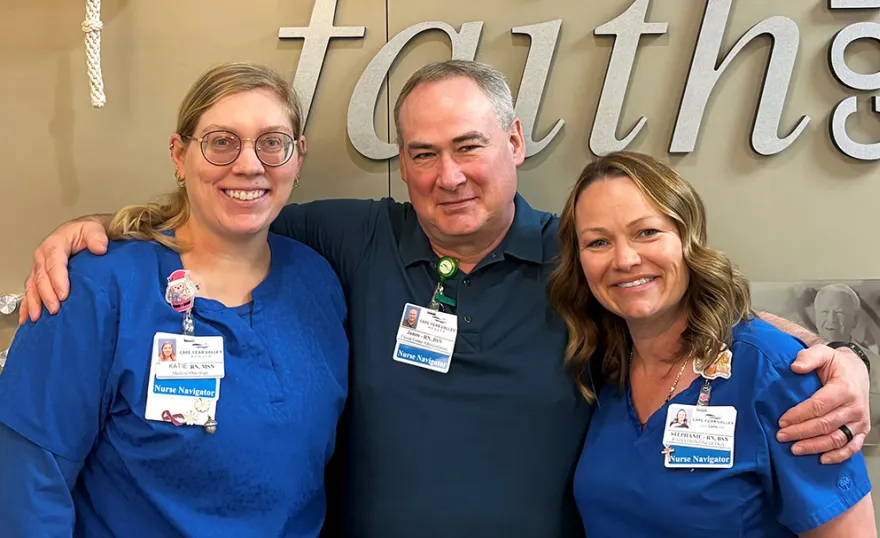
Radiation oncology nurse navigator Stephanie Green describes her work as far more than coordinating appointments.
“My goal is to help someone navigate their diagnosis, navigate the hospital system and support them through their journey,” she said. “Sometimes a familiar face makes all the difference.”
Green contacts patients before their first consultation, easing anxiety and identifying barriers such as transportation, insurance concerns or fear that could delay treatment. She says the most rewarding moments come at the end of treatment, when patients ring the bell.
Her motivation comes from witnessing the transformation that happens when patients complete treatment. “There is no better feeling than meeting a patient during the most fearful time of their life and seeing them ring the bell,” she said. “No paycheck will ever measure up to that moment.”
“My goal is to help someone navigate their diagnosis, navigate the hospital system and support them [the patient] through their journey. Sometimes a familiar face makes all the difference.” - Stephanie Green, Radiation Oncology Nurse Navigator
Medical oncology nurse navigator Jim McDuff brings decades of nursing experience to his role. Even after a long and varied career, he says oncology has been the most meaningful.
“Cancer patients are always grateful, no matter their diagnosis,” he said. “That gratitude is what keeps us going.”
He works closely with medical oncology navigator Kathryn West, who chose the field after losing her father to lung cancer.
“Cancer is overwhelming,” West said. “Patients hear so much information at once. Our job is to help them make sense of it and stay on track.”
Navigators often become a primary support system for patients who may not have family available to help. They answer questions, follow up on symptoms, assist with resources and check in during treatment. Many build deep, lasting relationships along the way.
“You learn about their families, their challenges and their lives outside of cancer,” West said. “You become part of their lives, and they become part of yours.”
As cancer rates rise across the region, Cape Fear Valley plans to expand its cancer center to increase space, resources and support services. With that growth will come the need for more navigators across all specialties.
“Our navigation team will definitely grow,” Green said. “Patients deserve that continuity.”
For individuals in healthcare considering a new specialty, McDuff offers encouragement.
“Take a leap of faith,” he said. “This is a rewarding place to work, and you will make a real impact.
Green agreed. “If you want to have the greatest impact on patients, come work with cancer patients,” she said. “This is the most rewarding specialty I’ve ever worked in.”
For patients walking into the cancer center uncertain and afraid, the navigation team provides something invaluable: consistency, compassion and support through every step.
Their work helps prevent delays, improves understanding of care plans and ensures patients always know whom to call. Most importantly, navigators help patients feel supported and never alone.
Many patients remember the navigator who stood with them from the beginning when they finally reach the moment they can ring the bell.
“You were there for me,” they often say.
For the navigators at Cape Fear Valley, that gratitude is the greatest reward of all and a reminder that not all superheroes wear capes.


